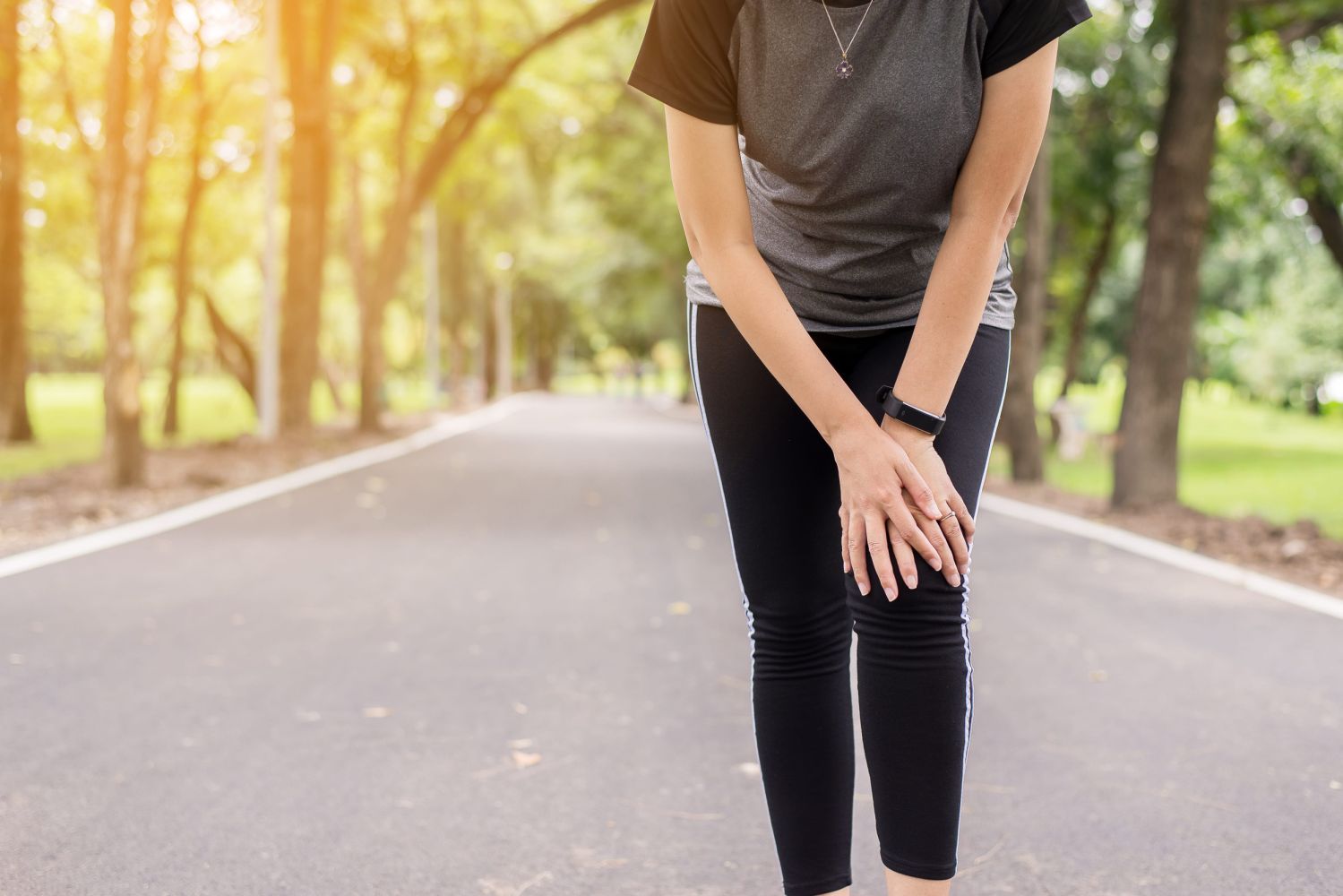
What Is Spring Knee and How to Prevent It
Patient Education Articles | May 20, 2026
As the weather warms up, it’s natural to want to get back outside—running, biking, walking, or playing sports. However, jumping back into activity too quickly after a quieter winter can sometimes lead to knee pain known as “spring knee.” Let’s break down what it is, why it happens, and how you can protect yourself.
What Is Spring Knee?
Spring knee is the term given to injuries that occur as a result of overstress and overuse. It’s common to be a little less active during the winter, and many people want to ratchet up their activity levels as the temperatures heat up and the weather becomes nicer. When you pair an extended period of limited activity with a short period of chronic stress, tissues and other structures in the knee can become overloaded. This can lead to tendon inflammation and swelling in the knee. It’s quite common among:
- Amateur runners
- Athletes preparing for a spring sport
- Cyclists
- Outdoor exercise enthusiasts
Symptoms of spring knee include knee pain, swelling, limited range of motion, stiffness and discomfort that increases with activity. If you’re noticing any of these symptoms, take a moment to consider your recent exercise habits. If you’ve greatly increased your exercise habits or the amount of stress on your knee, even if it wasn’t with high-impact movements, know that you may be dealing with a spring knee condition.
Treating Spring Knee
Fortunately, in the grand scheme of knee ailments, spring knee that’s causing inflammation and tendonitis is a rather simple fix. For starters, scale back your exercise and activity habits to limit the stress on your knee. This will provide an ideal environment for healing to take place. Remember that backing off activity doesn’t mean that you need to be inactive. You can pursue lower impact activities like walking or swimming to see how your knee responds to this type of stress. If it can handle it, pursue it a couple times of week, but if symptoms persist, back off for longer periods.
Other management techniques include:
- Heat/Ice - Ice and heat can help control circulation in and out of the area, helping to calm swelling and improve joint mobility.
- Anti-Inflammatory Medications - Anti-inflammatory medications can help keep swelling and inflammation at bay if activity is causing discomfort. Please make sure you’re not just taking these pills to cover up a real problem and doing nothing else for your knee.
- Mechanics Improvement - Depending on the exercises or activities that are causing your spring knee, working with a physical therapist or athletic trainer to improve your form can shift stress off the knee and reduce the risk that the activity will end up overstressing the knee.
While the above three treatments can be helpful, caring for spring knee really involves tampering down your activity levels in the short term and then gradually working to add more normal stress on your knees over time. If you’re a runner, slowly add to your distance or speed instead of trying to set a personal best the first time you run outside this season. Gradual stress increases can help prevent spring knee symptoms and treat the problem after you’ve rested it for a bit.
Contact Dr. Reznik for More Information & to Make an Appointment
Of course, if you want to learn more about knee injuries or how to make your knees stronger so that spring knee is less of a concern each year, pick up a copy of Dr. Reznik’s latest book, The Knee & Shoulder Handbook, available now on Amazon and at Barnes & Noble.
To make an appointment with Dr. Reznik or Jaclyn Francis call 203-865-6784. Or email Julie at [email protected].
